Sorry folks!
We've been getting a bit distracted with real life - and we forgot to post about it! Silly, I know.
Guess what? Something is happening! If you're a poet anywhere in the world, just send your nature-themed work to us by Friday and you can get it published. Pretty exciting, we know. If you live in the Penang area, be sure to drop by penangpac for Tapir 2014, where this work will be read for the public.
Welcome to the official website of MNI: Kill Wildlife Trafficking. Wander around our pages to find out what we're about, or enjoy updates and opinion columns on our home page. Let us know if you have any questions; remember, if you choose to make a difference, you can.
Showing posts with label wildlife. Show all posts
Sunday, 20 April 2014
Saturday, 14 September 2013
The Epulu Tragedy
The okapi is one of those enigmatic animals. You just can't quite figure them out. They're quiet and elusive, they live in the remote rain forests of central Africa, and they...have zebra stripes on their butts. Kind of.
| An odd creature: the okapi's closest relative is actually the giraffe. Photo courtesy of the Okapi Conservation Project. |
The Epulu Station, situated deep in the forests of the Democratic Republic of Congo, had received threats from groups due to their work against poaching in the area. Agencies responsible for the conservation center (which housed nine okapis and numerous scientists) ignored the threats, and early one morning of June 2012, the station and the nearby village was pillaged and ransacked.
Two people and all the okapis on-site were murdered.
I just have one blaring question: why did the media never cover this?
This is also a stark reminder of how dangerous it is to be a conservationist these days. When people go out to save the environment, they really are risking their lives. They are everyday heroes: conservation work isn't just for the conservationist because their work benefits all of us.
I personally read this story only a few days after learning of the death of Jairo Mora Sandoval. I got chills.
Read what happened at the station in detail here.
Saturday, 24 August 2013
Cuteness Overload...Right?
And that's the problem. People don't know any better - that needs to change.
According to work done by the likes of Professor Anna Nekaris (basically the slow loris lady out there), videos like these are boosting demand for any species of slow loris.
It doesn't take a rocket scientist to see how this is possible. When I first saw this video, I thought it was completely harmless. Not long after, I started to learn the truth.
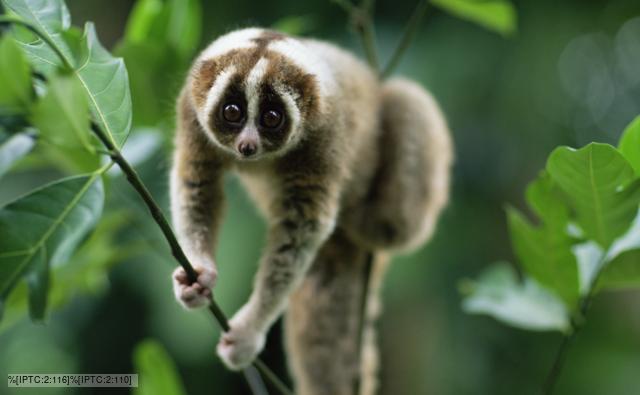
| A loris in the wild, where it should be. Image from Arup Shah via BBC Wildlife. |
- "They come from captivity." Experts have found it near impossible to breed lorises in captivity - they often don't survive long enough.
- "This loris is happy." Raising arms, like the loris in this video is doing, is often a sign of distress in lorises. Lorises are also very sensitive to light, being a primarily nocturnal species, and you can see the wide eyes of the one in the video.
- "They are easy to look after." Lorises have a very specific diet that humans cannot replicate in captivity. They are not meant to survive off of bananas and rice balls, and will not last long on such a diet.
- "They can just go back to the wild later." Most lorises, after being removed from the wild, have their teeth violently removed with pliers. They never eat properly again.
In a disturbing turn of events, YouTube refuses to remove this video and others like it, claiming it not to be animal abuse. In the comments, if you talk about the wildlife trade and discuss ramifications of the video, chances are you will be voted down so much YouTube will remove your comment!
The first step to curbing demand for the loris is recognizing that is it not a cut pet but a wild animal. Also, take a minute to sign this petition asking YouTube to remove videos of captive lorises.
For more on slow loris conservation, visit Nekaris' Little Fireface Project and learn about her work in the region.
Saturday, 10 August 2013
Another One Bites the Dust
"It is a sad fact that to many people the loss of a plant species is of less moment than the loss of a football match."
Richard Fortey, Dry Store Room No. 1
| Another species of Dipterocarpus. Picture from arkive.org |
Losing a species is more of a tragedy than most people realize. Even if it is not one at the top of the food chain, it's loss still has a lasting impact on all the other species connected to it. In South America, these survival-oriented symbiotic relationships are to such an extent that if a single species of hummingbird were to go extinct, an entire specie of Heliconia would go with it.
| A purple-throated carib, a specie of hummingbird that has evolved to eat almost entirely from a single species of Heliconia (hence the extensively curved beak). Picture by Ethan Temeles via Smithsonian Magazine Online. |
Some say that losing a species is part of progress; but development is not the same as progress. We cannot continue to develop so irresponsibly if we want to have something other than a concrete jungle left.
The keruing paya, only one of a staggering 230 species of flora on the brink of extinction in peninsular Malaysia, is a stark reminder that we need to act now if we do not want to lose even more of our own biodiversity.
Sunday, 4 August 2013
Belated Global Tiger Day
This is a few days late, I know. I just had to share this infographic - a LOT of food for thought!
Global Tiger Day, not to be confused with World Tiger Day later this year, is a day specifically aimed at raising awareness for the plight of tigers, specifically from major NGO groups like WWF and Traffic. I too, however, am guilty of confusing the two holidays, so don't despair! There are dozens of purpose-created holidays that help get attention.
Consider this:
The top estimate for world tiger populations is 3200.
Just under half of the 3200 must have been killed in order to supply seizures.
This includes only official seizures.
In a good year, law officials catch around 20-30% of trafficked goods.
How many tigers are there actually left??
Monday, 29 July 2013
Use Your Resources
On July 20th I had the fantastic opportunity to attend Traffic's Wildlife Superheroes workshop, right here on the island of Penang.
I was fascinated by the turnout - almost no young people. I was happy to see the older generation getting involved, but sad to see so few of "my own" there. I am assuming they were too busy trying to get toy Minions from McDonald's (seriously, what is up with that?). I personally think slow lorises are cuter, but then again, most people don't know what a slow loris is.
But I'm getting distracted.
The workshop really was fantastic. Aside from getting to spend a morning learning about something I love, I enjoyed learning new little details about the trade. There were amazing pictures of men with snakes in suitcases and birds around the ankles, and we even got to see dummy egg-smuggling shirts and underwear (that's dedication). These articles of clothing, used to smuggle reptile and bird eggs, have little individual pockets sown in for each egg.
![]() |
| A South American example of an "egg smuggling shirt." Picture from The Independent. |
One resource they shared with us, however, I think is useful for every Wildlife Warrior to have: Species Identification Sheets! We need to use the information we have access to - we need to be informed. If we don't know it when we see it, what good is seeing it at all? They may seem a little dry and boring, but they are quick and easy to use. You can identify species and their derivatives, learn local names for the species, and discover laws that protect the species. These are useful things to know even if you are just walking around and spot something suspicious. (On a side note, if you see this, be sure to call the anonymous 24-hour wildlife crime hotline, 019-3564194.)
The sheets can be downloaded here.
If you're interested in these workshops, three more will be held within the year (including in KL and on Penang's mainland). More information is available on Traffic's Facebook page.
The sheets can be downloaded here.
If you're interested in these workshops, three more will be held within the year (including in KL and on Penang's mainland). More information is available on Traffic's Facebook page.
Labels:
egg,
identification,
loris,
malaysia,
McDonald's,
minion,
Penang,
sheet,
smuggle,
superhero,
trade,
traffic,
wildlife,
workshop
Saturday, 13 July 2013
Wildlife Superheroes Wanted!
If you are in Penang next Saturday (20th July) make sure to drop by Disted and hear first-hand from Traffic South East Asia about one of the industries destroying local biodiversity.
Sunday, 7 July 2013
Breaking News!
http://www.reuters.com/article/2013/07/02/us-obama-wildlife-trafficking-idUSBRE96117Y20130702
This fantastic piece of news was released earlier this month. In new legislation, Obama hopes to curb trade in materials such as rhino horn and elephant tusk.
The United States is applauded for its commitment. Following statements regarding the wildlife trade earlier this year by former US Secretary of State Hillary Clinton, this pragmatic first step will be appreciated by wildlife everywhere. (Go here for more on what Clinton said at the time: http://www.state.gov/r/pa/prs/ps/2012/11/200355.htm)
With connections between major terrorist groups and trafficking finally being acknowledged, it is a hope that support for the program will continue to grow.
While it focuses mainly on African issues with the trade, it is important to remember that most demand comes from the Pan-Asian region. Through educating this community about the "work" they are supporting, we all can play a role in curbing the illegal wildlife trade.
Labels:
Africa,
America,
Clinton,
crime,
education,
elephant,
Hillary,
legislation,
Obama,
president,
Rhino,
security,
states,
trade,
trafficking,
united,
wildlife
Saturday, 6 July 2013
Irrational Fears Part 2
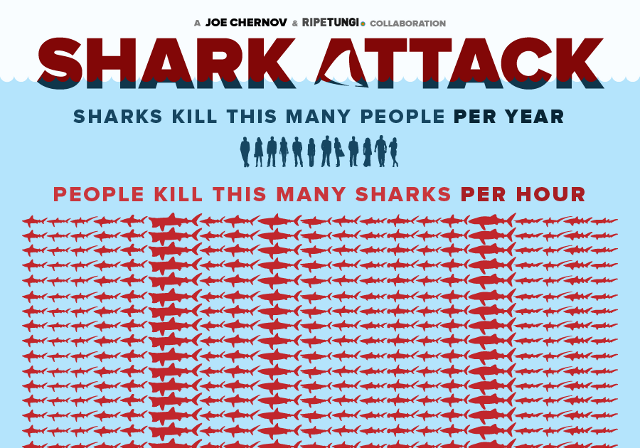
Somewhere in here, imagine a couple thousand more sharks. (Actually, between the two images you're only seeing about 600 sharks. Please do a lot of imagining.)
Twelve people is actually a high per year, as scary as that is. The total for all shark attacks in record numbers only a few hundred. You're more likely to die from alcohol than a shark attack. As the internet meme goes, though, "I too would attack anyone wandering into my house wearing only a speedo."Revealing swimsuits aside, shark finning is a serious issue and a major player in the wildlife trade.
Essentially, finning is the practice where boats troll for sharks, and upon finding them, lift them out of the water and cut off only what is valuable - the fins. This is equivalent to having your arms and legs cut off - you're incapacitated at best. Once this is done, the shark is thrown back into the water (no one wants the rest of it, and why keep the evidence?) to drown. Since, you know, without arms or legs, it can't really swim anymore.
This fins are then thrown into giant freezers in hot spots around the world, such as Hong Kong, where they are then sent out to the world's top restaurants. Or they are dried and cured, to be sold at a market. Regardless, they all go for consumption.
The main culprit is the infamous Chinese dish, shark fin soup. Most restaurants now only serve a prosthetic plastic version, but some restaurants still carry the real deal. A true symbol of luck and prosperity, this is a dish many are unwilling to give up. As more of the world finds itself in a position to consume things it never could afford before, demand for traditional emblems such as shark fin soup rages and roars.
If we want to save the shark species of the world, we need to get over our fear of sharks and our ideas about shark fin soup. Eating shark can't be cool anymore; it can't remain a symbol of good.
Here are some stats to chew on in the meantime.
Labels:
attack,
conservation,
culture,
demand,
fear,
fin,
finning,
food,
industry,
irrational,
ocean,
popular,
shark,
soup,
trade,
wildlife
Tuesday, 11 June 2013
Bad News
Bureaucracy has its positives and its negatives.
Due to the long and arduous process, MNI has to sadly postpone events until August of this year. On the bright side, the program will be even bigger and better!
We look forward to seeing you then.
Due to the long and arduous process, MNI has to sadly postpone events until August of this year. On the bright side, the program will be even bigger and better!
We look forward to seeing you then.
Labels:
2013,
august,
event,
forward,
impossible,
mission,
not,
postpone,
trafficking,
wildlife,
youth
Sunday, 26 May 2013
Update
Hi everyone.
Long time, no post. Gearing up for our events in June and July has been keeping us busy! Be sure to read about those and ask us if you have any questions.
We'll get back to a more frequent posting schedule soon. :)
Long time, no post. Gearing up for our events in June and July has been keeping us busy! Be sure to read about those and ask us if you have any questions.
We'll get back to a more frequent posting schedule soon. :)
Saturday, 27 April 2013
World Tapir Day
This is a super fun holiday!
The tapir is one of the world's most interesting mammals - they look like no one and nothing else. Their closest relatives are, in fact, horses and rhinos.
There are four species of tapir in the world: the Brazilian, Baird's, Mountain, and Malayan. Only on of these is not under threat, and here's a hint: it's not the Malayan.
The Malayan tapir is possible the most distinct of the four species, with its quickly noticeable black-and-white markings. It is also the largest of the three species.
With a wild population numbering less than one thousand, the Malayan tapir is indeed endangered. However, this species is not threatened due to the wildlife trade (eating tapir is taboo in many of the cultures inhabiting the Southeast Asian region). Many are killed due to loss of habitat, and strangely enough, while crossing the road.
On a lighter note, here's a picture from Malaysian Nature Society; they had a special guest
at Taman Negara last night!
The tapir is one of the world's most interesting mammals - they look like no one and nothing else. Their closest relatives are, in fact, horses and rhinos.
There are four species of tapir in the world: the Brazilian, Baird's, Mountain, and Malayan. Only on of these is not under threat, and here's a hint: it's not the Malayan.
The Malayan tapir is possible the most distinct of the four species, with its quickly noticeable black-and-white markings. It is also the largest of the three species.
With a wild population numbering less than one thousand, the Malayan tapir is indeed endangered. However, this species is not threatened due to the wildlife trade (eating tapir is taboo in many of the cultures inhabiting the Southeast Asian region). Many are killed due to loss of habitat, and strangely enough, while crossing the road.
On a lighter note, here's a picture from Malaysian Nature Society; they had a special guest
at Taman Negara last night!
Labels:
animal,
Baird,
Brazilian,
day,
endangered,
Malayan,
malaysia,
mountain,
Negara,
rainforest,
species,
taman,
tapir,
visit,
wildlife,
world
Subscribe to:
Posts (Atom)