Welcome to the official website of MNI: Kill Wildlife Trafficking. Wander around our pages to find out what we're about, or enjoy updates and opinion columns on our home page. Let us know if you have any questions; remember, if you choose to make a difference, you can.
Showing posts with label adorable. Show all posts

Saturday, 24 August 2013

Cuteness Overload...Right?

For someone who doesn't know any better, this video is downright adorable. 

And that's the problem. People don't know any better - that needs to change.

According to work done by the likes of Professor Anna Nekaris (basically the slow loris lady out there), videos like these are boosting demand for any species of slow loris.

It doesn't take a rocket scientist to see how this is possible. When I first saw this video, I thought it was completely harmless. Not long after, I started to learn the truth.
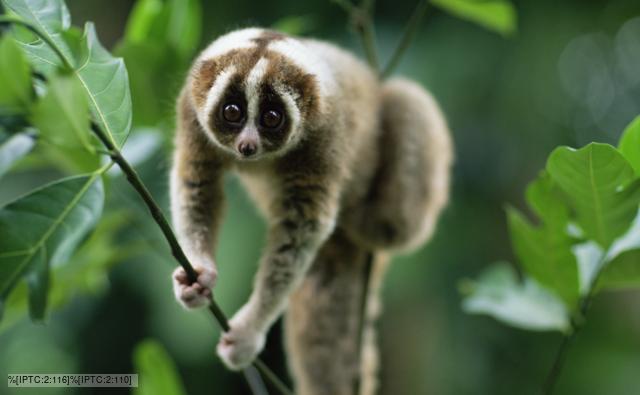
A loris in the wild, where it should be. Image from Arup Shah via BBC Wildlife.
Basic Loris Myths Debunked

  • "They come from captivity." Experts have found it near impossible to breed lorises in captivity - they often don't survive long enough.
  • "This loris is happy." Raising arms, like the loris in this video is doing, is often a sign of distress in lorises. Lorises are also very sensitive to light, being a primarily nocturnal species, and you can see the wide eyes of the one in the video.
  • "They are easy to look after." Lorises have a very specific diet that humans cannot replicate in captivity. They are not meant to survive off of bananas and rice balls, and will not last long on such a diet.
  • "They can just go back to the wild later." Most lorises, after being removed from the wild, have their teeth violently removed with pliers. They never eat properly again.

In a disturbing turn of events, YouTube refuses to remove this video and others like it, claiming it not to be animal abuse. In the comments, if you talk about the wildlife trade and discuss ramifications of the video, chances are you will be voted down so much YouTube will remove your comment!

The first step to curbing demand for the loris is recognizing that is it not a cut pet but a wild animal. Also, take a minute to sign this petition asking YouTube to remove videos of captive lorises.

For more on slow loris conservation, visit Nekaris' Little Fireface Project and learn about her work in the region.

Wednesday, 7 August 2013

Happy World Lemur Month

I know, I know, lemurs seem to be a far cry from having any relevance to either Malaysia or wildlife trafficking. In fact, a vast array of tortoise seizures in our country originate in Madagascar. But I'm not going to get into that today. 

It is officially World Lemur Month! Arbitrary holiday though it may be (and there are no days off), it helps draw attention (as most of these World Anything Days/Months/Years tend to do) to a serious issue.


A Sifaka lemur bounds through the forest. Zaboomafoo, the American children's TV show character, was a Sifaka. Image by Burrard-Lucas/Barcroft via the Telegraph.
Our cute lemur friends are the most endangered group of vertebrates in the world. Of anything on this planet with a spine, these guys are at the highest risk of extinction, with a staggering 91% of species considered threatened by the IUCN, or the International Union for the Conservation of Nature.

 Lemurs, you could say, have drawn the short straw - they exist only one island, an island that has seen continuous political turmoil, economic exploitation, poverty, and naturally, deforestation. Less than a third of the island's original forests remain.

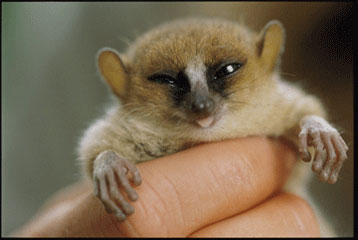
Even today, we do not know all that Madagascar holds. Just recently, three new species of lemur have been discovered, including this adorable little fellow below, whose common name has not yet been ascribed.
Microcebus mittermeieri, a newly discovered species of mouse lemur. It is small enough to fit into your hand. Photo from Mongabay.
Madagascar is a reminder that we do not, by any means, know all that our rain forests hold.