Welcome to the official website of MNI: Kill Wildlife Trafficking. Wander around our pages to find out what we're about, or enjoy updates and opinion columns on our home page. Let us know if you have any questions; remember, if you choose to make a difference, you can.
Showing posts with label trafficking. Show all posts

Saturday, 31 August 2013

Op Ed: Why Some and Not Others?

Happy Merdeka Day!

To celebrate Malaysian pride, I'm going to...keep talking about animals. Yay! 

Talking about my project to a friend, they brought up a question I had never even considered.

Why is it OK to eat some animals and not others?

To a die-hard animal lover, this sort of thought never even crosses their minds. It never did for me. I never asked myself why I was dedicated to conservation; I just knew in my heart that I was. 

Coming from this perspective, I am going to try and answer my friend's question. I'm not trying to create a perfect answer with no loopholes. if this sort of issue was black-and-white, I don't believe I'd even be answering this question.

Humans, in previous years, were the top of the food chain. For the most part, we have now (luckily) been removed from that food chain (most of us are not so worried about being eaten by a lion this afternoon). However, we have taken with us a select few species of domestic animals. 
Lucky for you, this guy doesn't think you'd make a very good meal. He doesn't seem very impressed at all, really. Photo from Lion's Share Digital.
They, too, have been removed from the food chain. We are responsible for them. We now farm things that we eat - chickens, cows, pigs, goats. (I will not address the issue of factory farming here.) So we've effectively taken them with us. They are no longer subject to being eating by roving lions either. When we eat them, we have control over their population and their lifestyle.

However, with wild animals, we have not removed them from the food chain. They are still subject to the forces of nature - different species working in a sort of "checks and balances" system where controlling one effectively controls all. 

In a simple example, if we have too many top predators, too many middle-range herbivores will be eaten, leading to seeds that won't get spread and grass that won't get eaten. This in turn will lead to numerous ecological balancing catastrophes.


Notice that humans often do not feature in these sorts of pyramids - we are no longer native to these ecosystems. Illustration from Tutor Vista.
When we step in here and try to artificially manage a population, we have an issue. We are no longer part of the system - we don't really know what we're doing. When we eat from this environment, we destroy the balance. 

This is just a sort, simple way to think about it. I won't go into issues of morality here - there is too much gray area to make a proper assessment. Hopefully this helps clear the air in terms of "WHY?" for a little bit. 

P.S. A bonus reason is that wild animals are pretty and don't need to be eaten because they look better running majestically through the 2000 sq ft of habitat they have left. ;)
Majestic zebras run in their 2000 sq ft. Image via Wallpaper Wide.
Perhaps I should have included more Malaysian wildlife... oh well. 

Saturday, 24 August 2013

Cuteness Overload...Right?

For someone who doesn't know any better, this video is downright adorable. 

And that's the problem. People don't know any better - that needs to change.

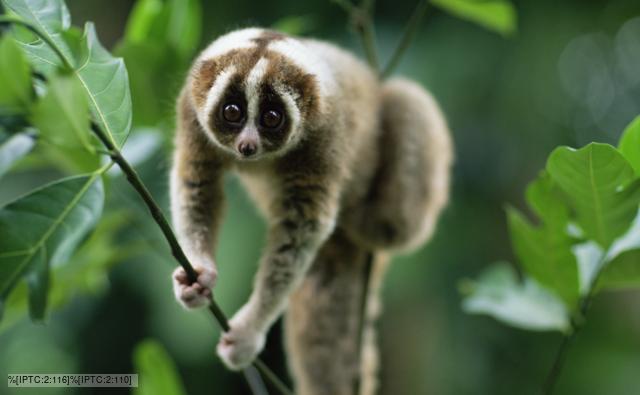
According to work done by the likes of Professor Anna Nekaris (basically the slow loris lady out there), videos like these are boosting demand for any species of slow loris.

It doesn't take a rocket scientist to see how this is possible. When I first saw this video, I thought it was completely harmless. Not long after, I started to learn the truth.

A loris in the wild, where it should be. Image from Arup Shah via BBC Wildlife.
Basic Loris Myths Debunked

  • "They come from captivity." Experts have found it near impossible to breed lorises in captivity - they often don't survive long enough.
  • "This loris is happy." Raising arms, like the loris in this video is doing, is often a sign of distress in lorises. Lorises are also very sensitive to light, being a primarily nocturnal species, and you can see the wide eyes of the one in the video.
  • "They are easy to look after." Lorises have a very specific diet that humans cannot replicate in captivity. They are not meant to survive off of bananas and rice balls, and will not last long on such a diet.
  • "They can just go back to the wild later." Most lorises, after being removed from the wild, have their teeth violently removed with pliers. They never eat properly again.

In a disturbing turn of events, YouTube refuses to remove this video and others like it, claiming it not to be animal abuse. In the comments, if you talk about the wildlife trade and discuss ramifications of the video, chances are you will be voted down so much YouTube will remove your comment!

The first step to curbing demand for the loris is recognizing that is it not a cut pet but a wild animal. Also, take a minute to sign this petition asking YouTube to remove videos of captive lorises.

For more on slow loris conservation, visit Nekaris' Little Fireface Project and learn about her work in the region.

Saturday, 13 July 2013

Wildlife Superheroes Wanted!

If you are in Penang next Saturday (20th July) make sure to drop by Disted and hear first-hand from Traffic South East Asia about one of the industries destroying local biodiversity.
Hope to see you there!

Sunday, 7 July 2013

Breaking News!

http://www.reuters.com/article/2013/07/02/us-obama-wildlife-trafficking-idUSBRE96117Y20130702

This fantastic piece of news was released earlier this month. In new legislation, Obama hopes to curb trade in materials such as rhino horn and elephant tusk.

The United States is applauded for its commitment. Following statements regarding the wildlife trade earlier this year by former US Secretary of State Hillary Clinton, this pragmatic first step will be appreciated by wildlife everywhere. (Go here for more on what Clinton said at the time: http://www.state.gov/r/pa/prs/ps/2012/11/200355.htm) 

With connections between major terrorist groups and trafficking finally being acknowledged, it is a hope that support for the program will continue to grow.

While it focuses mainly on African issues with the trade, it is important to remember that most demand comes from the Pan-Asian region. Through educating this community about the "work" they are supporting, we all can play a role in curbing the illegal wildlife trade.

Tuesday, 11 June 2013

Bad News

Bureaucracy has its positives and its negatives.

Due to the long and arduous process, MNI has to sadly postpone events until August of this year. On the bright side, the program will be even bigger and better!

We look forward to seeing you then.

Sunday, 26 May 2013

Update

Hi everyone.

Long time, no post. Gearing up for our events in June and July has been keeping us busy! Be sure to read about those and ask us if you have any questions.

We'll get back to a more frequent posting schedule soon. :)